
 Servicing All of Southeastern Wisconsin
.png)
The Hot Weather Pour: Tips for Preventing Flash Setting and Cracking
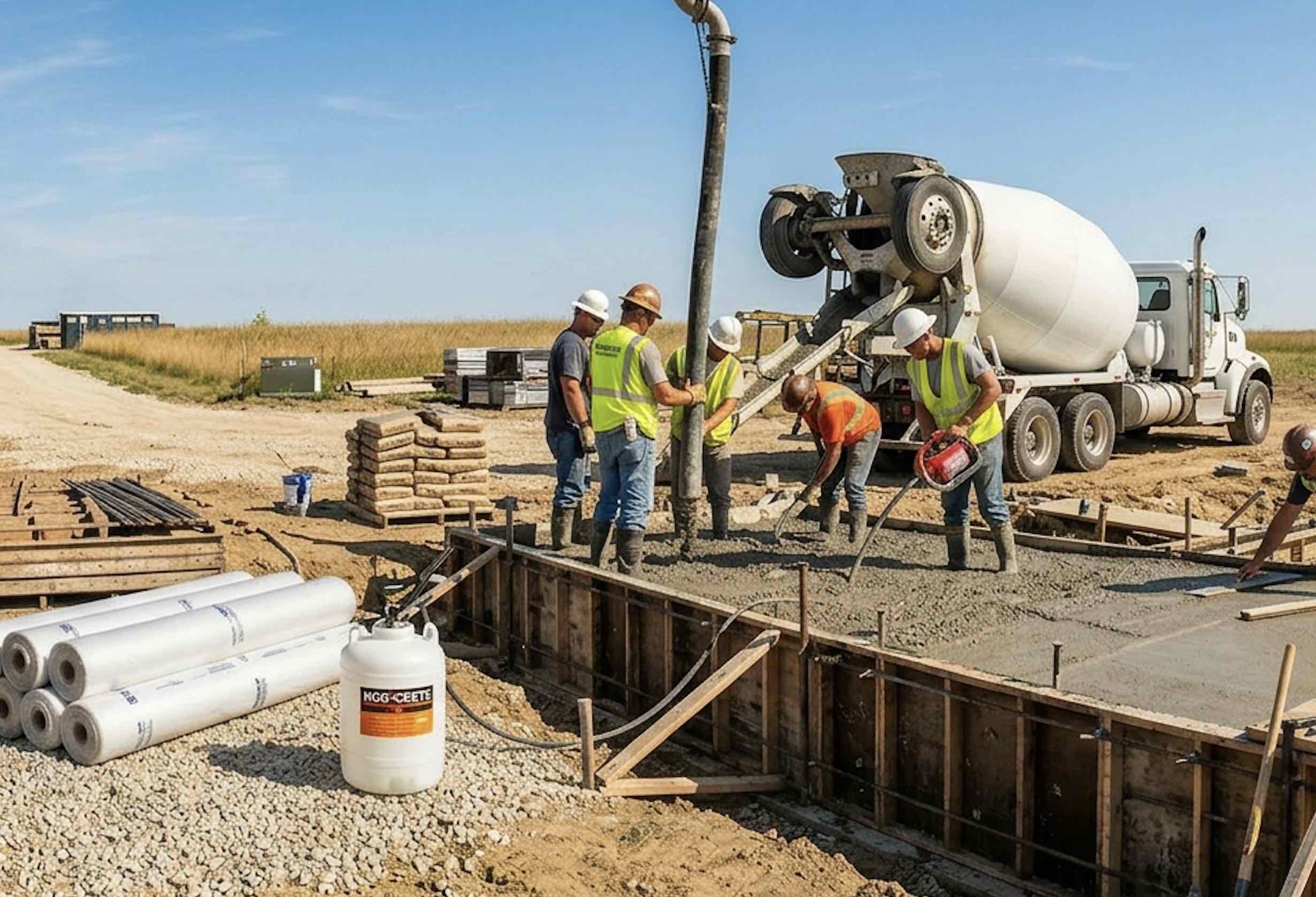
Summer in the Midwest means peak construction season, but it also brings hot, dry days and sudden humidity drops that can wreak havoc on a fresh concrete pour. When temperatures rise, the water in your mix evaporates too quickly. This leads to flash setting (where the concrete stiffens before it can be properly placed and finished) and plastic shrinkage cracking (surface cracks that develop while the concrete is still weak).
To ensure your residential or commercial foundations stay structurally sound and visually clean this summer, your crew needs a hot-weather battle plan. Here is how to beat the heat on your next pour using the right techniques and job site supplies.
1. Prep the Subgrade and Forms
If you pour hot concrete onto bone-dry ground or baking-hot forms, they will instantly suck the moisture right out of your bottom layer.
The Fix: Before the mixer truck arrives, thoroughly douse your subgrade and forms with water. You want them damp to cool down the surface temperature and prevent them from absorbing the mix’s water, but ensure there is no standing standing water left behind.
2. Time Your Pour Strategically
Whenever possible, avoid placing concrete during the heat of the day (typically between 10:00 AM and 4:00 PM) when direct sunlight and UV rays maximize evaporation rates.
The Fix: Schedule your pours for the early morning. Not only is the air cooler, but the subgrade hasn't had all day to bake under the sun.
3. Have Emergency Protection Ready on the Truck
Even with the best planning, a sudden spike in wind or a delay in finishing can cause the concrete surface to dry out faster than the bleed water can rise. If the surface dries out while the underlying concrete is still plastic, spiderweb-like cracks will form.
The Fix: Keep rolls of heavy-duty 6 Mil Poly or 4 Mil Poly right on the truck. If finishing is delayed or the drying winds pick up, you can temporarily tent or cover the concrete to trap the moisture and protect the slab from premature drying.
4. Don't Skip the Moisture Barrier
For indoor slabs or specific residential footprints, preventing moisture loss from the bottom of the pour is just as critical as protecting the top.
The Fix: Laying down a durable vapor barrier using 6 Mil Poly helps retain the concrete's internal mixing water, ensuring an even, uniform cure from the bottom up despite high ambient temperatures.
5. Seal It Fast with the Right Cure & Seal
The job isn't done when the trowels are put away. Hot weather requires immediate action to seal in the hydration necessary for the concrete to reach its full design strength.
The Fix: Apply a high-quality curing compound as soon as the finishing work is completed and the surface water sheen disappears. Using a premium product like NOX-CRETE Cure & Seal 1315A-700 creates a moisture-retaining membrane over the slab. This drastically slows down evaporation, eliminates plastic shrinkage cracking, and ensures the concrete cures to its maximum durability.
Gear Up for Summer Pours in Wisconsin
Don't let a July heatwave ruin a high-dollar pour. Keeping your job site stocked with the right essentials ensures your crew can work efficiently without racing against a flash set.
From Poly sheeting and Nox-Crete curing sealers to the Nail Stakes, Rebar, and Duplex Nails you need to lock your forms down tight, Midwest Forms & Supply has your summer material list covered.
Need to restock before your next big summer pour? Give us a call at 262-770-8705 to get your materials loaded right at your job site.
Date Posted: Thu, 06/11/2026 - 14:15
